Published on: 2026-04-06
Updated on: 2026-04-07
Gearing ratio is a financial metric that measures a company’s debt relative to its equity or total capital. It is widely used by traders and investors to assess financial risk, leverage, and capital structure. Gearing ratio helps traders evaluate a company's exposure to debt obligations, especially during periods of economic uncertainty or rising interest rates.
A highly geared company may offer higher returns during strong economic conditions but can face increased risk during downturns. For traders, this balance between risk and reward makes the gearing ratio a key consideration in equity analysis.
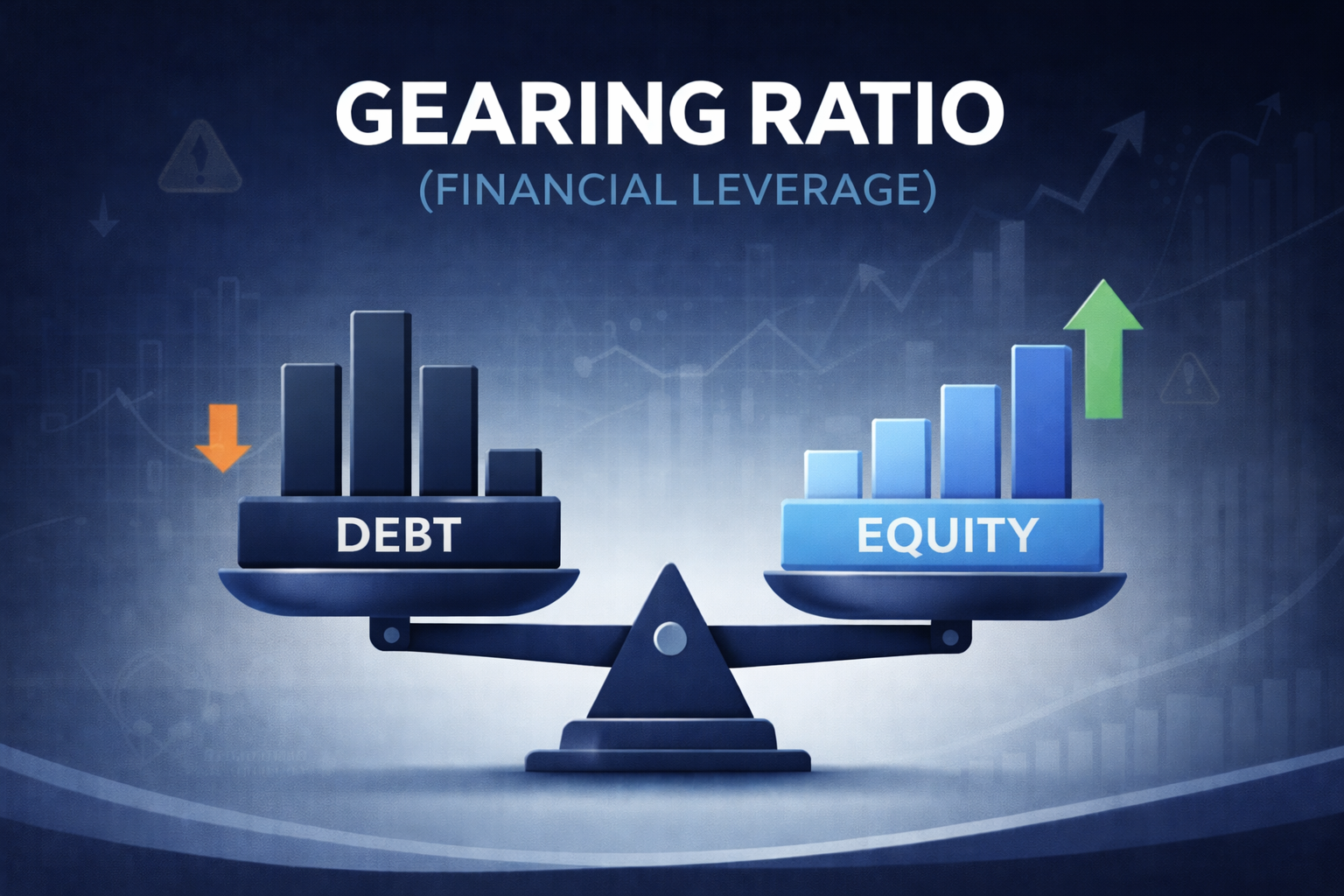
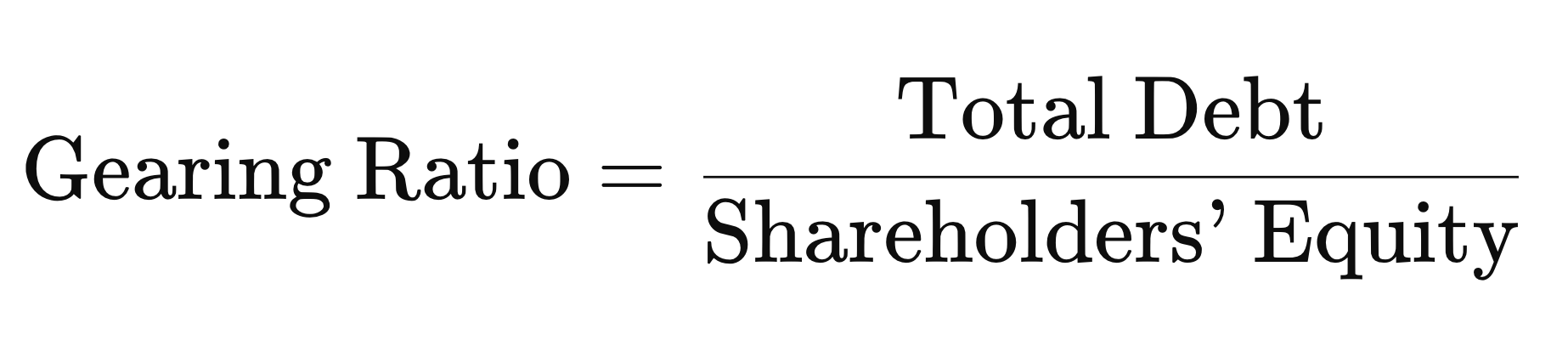
The gearing ratio refers to a group of financial ratios that indicate how much a company relies on borrowed funds (debt) compared to its own capital (equity).
Rather than a single formula, gearing is a concept that can be measured in different ways depending on the aspect of financial risk being analysed.
For example, if a company has:
$500 million in debt
$1 billion in equity
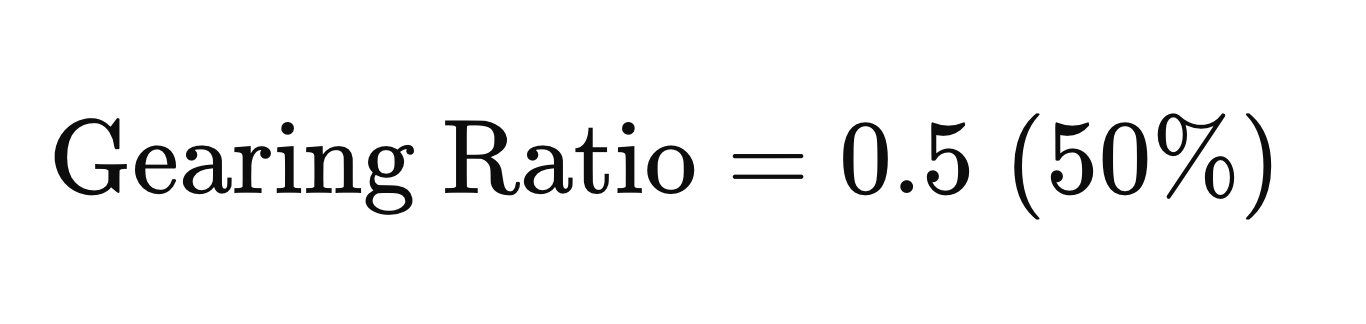
This means the company uses 50 cents of debt for every $1 of equity.
High Gearing (>50%)
Indicates heavy reliance on debt financing.
Higher financial risk
More sensitive to interest rate changes
Potential for amplified returns during growth periods
Low Gearing (Indicates limited use of debt.
Lower financial risk
More stable balance sheet
May suggest underutilisation of capital for growth
25% – 50% Range
Often considered a balanced or sustainable level of gearing.
Combines growth potential with manageable risk
Typically viewed favourably by investors.
However, “optimal” gearing varies significantly by industry.
High Gearing Industries: Utilities, telecoms, infrastructure
Low Gearing Industries: Technology, startups
This is why traders should compare gearing within the same sector, not across different industries.
There is no single gearing ratio, traders commonly use several variations:
Risk Assessment
High gearing increases the risk of financial distress during downturns.
Interest Rate Sensitivity
Highly leveraged companies are more exposed to rising borrowing costs.
Return Amplification
Debt can boost returns during strong economic conditions.
Stock Volatility
Highly geared companies tend to experience larger price swings.
Gearing ratios are widely used to assess a company’s financial leverage, but they are often misunderstood. Below are some of the most common misconceptions traders and investors should be aware of:
High gearing is not inherently negative, it depends on how effectively the borrowed capital is used. Companies with higher debt levels can potentially generate greater returns on equity if the borrowed funds are invested in profitable projects. Traders should evaluate whether the company is using leverage efficiently rather than assuming high gearing is automatically a red flag.
Low gearing reduces financial risk, but it does not eliminate other types of risk. A company with minimal debt may still face operational challenges, such as declining demand, poor management, or weak competitive positioning. In some cases, very low gearing may even suggest that a company is not fully utilising growth opportunities. Low gearing should be viewed as one aspect of stability, not a guarantee of overall safety.
There is no universal benchmark for an ideal gearing ratio. Acceptable levels vary significantly depending on the industry, business model, and economic environment. For example, capital-intensive industries like utilities or infrastructure may operate with higher gearing, while tech companies typically maintain lower debt levels. Traders should compare gearing ratios within the same industry and consider broader market conditions before drawing conclusions.
Rising Interest Rate Environment
Traders may avoid highly geared companies due to increasing debt costs.
Economic Expansion
Leveraged companies may outperform due to amplified earnings growth.
Market Uncertainty
Investors may prefer low-gearing companies for stability and resilience.
This makes gearing ratio a key tool in risk management and stock selection.
Leverage: The use of borrowed funds to increase potential investment returns.
Debt-to-Equity Ratio: A financial ratio comparing a company’s total debt to its shareholders’ equity.
Interest Coverage Ratio: A measure of a company’s ability to meet its interest payment obligations.
Capital Structure: The combination of debt and equity that a company uses to finance its operations.
Financial Risk: The risk of loss arising from a company’s use of debt and its ability to meet obligations.
A good gearing ratio typically ranges between 25% and 50%, indicating a balanced use of debt and equity. However, acceptable levels vary by industry, as capital-intensive sectors often operate with higher gearing compared to asset-light businesses.
High gearing is risky because companies must meet fixed interest and debt repayments regardless of financial performance. During economic downturns or declining revenues, this can strain cash flow, increase default risk, and negatively impact overall financial stability.
The gearing ratio is more relevant for swing and long-term investors, as it reflects financial health. However, short-term traders can still use it to assess risk, especially when trading highly leveraged companies during volatile market conditions.
Yes. A high gearing ratio can amplify both gains and losses, making stocks more sensitive to earnings changes. Investors may view excessive debt as risky, leading to increased volatility and sharper price movements.
Gearing refers specifically to a company’s debt relative to its equity, and it measures the financial structure. Leverage is a broader concept that includes both corporate debt and the use of borrowed funds in trading to amplify potential returns and risks.
The gearing ratio is a key financial metric that measures a company's reliance on debt relative to equity. It helps traders assess financial risk, interest rate sensitivity, and potential return amplification. Understanding high, moderate, and low gearing levels, along with different ratio types, traders can make more informed decisions when analysing stocks and managing risk.
Disclaimer: This material is for general information purposes only and is not intended as (and should not be considered to be) financial, investment or other advice on which reliance should be placed. No opinion given in the material constitutes a recommendation by EBC or the author that any particular investment, security, transaction or investment strategy is suitable for any specific person.