Published on: 2026-06-15
Argentina, Bolivia, and Venezuela bear an inflation burden 21 times higher than the Latin American regional average, a disparity not evident in aggregate figures. Although these countries comprise only 13% of the region's population, a population-weighted calculation based on IMF 2026 forecasts places their inflation exposure at 138.6%, compared to the regional baseline of 6.7%.
This analysis does not suggest continent-wide inflation but rather identifies where the region's most severe price pressures are concentrated.
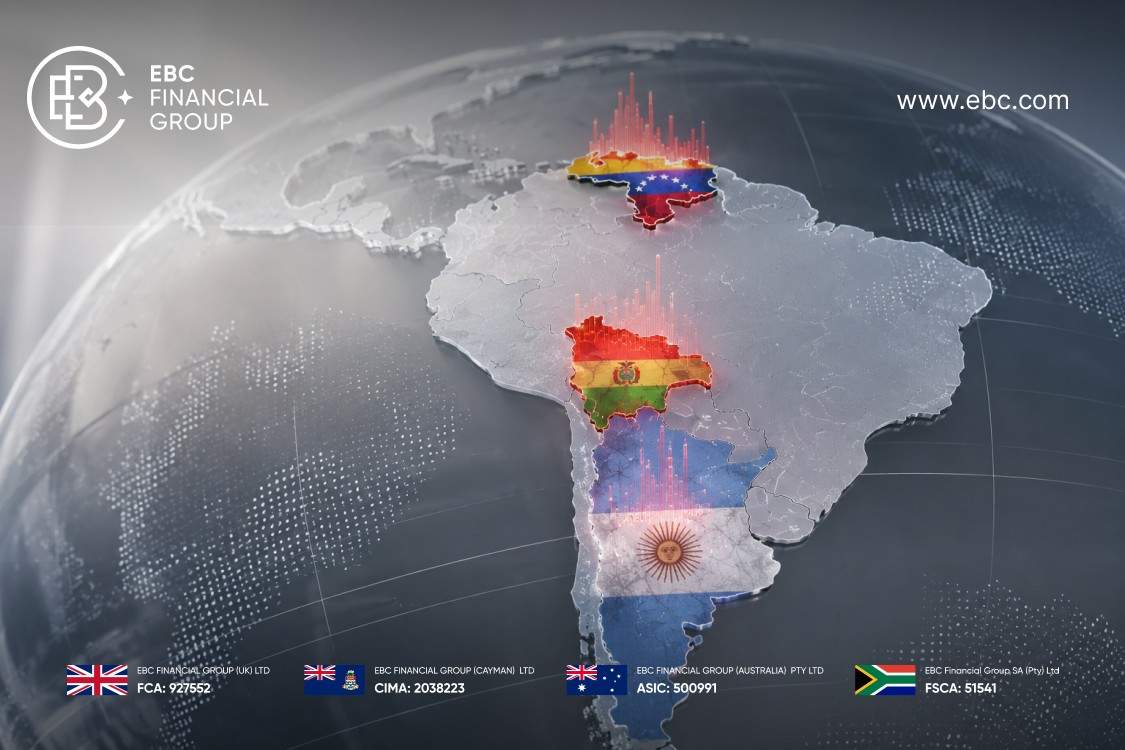
Argentina, Bolivia, and Venezuela represent only 13% of the Latin American population, their population-weighted inflation forecast for 2026 is 138.6%.
The trio’s inflation exposure is roughly 21 times Latin America and the Caribbean’s 6.7% regional baseline.
Venezuela contributes 85.8% of the trio's inflation-weighted burden; however, Argentina and Bolivia together still account for a 28.4% inflation-weighted burden.
Argentina's population of 47.9 million amplifies the impact of its 30.4% inflation forecast, contributing significantly to the regional inflation burden.
Bolivia adds the stagflation signal: projected -3.3% GDP growth and 20.7% inflation mean prices rise while output contracts.
Latin America’s 6.7% inflation forecast is a baseline, not a map. Argentina, Bolivia and Venezuela do not define the region. They show where the price pressure is most compressed.
Together, the three economies have a population of 87.6 million, or about 13% of the population of Latin America and the Caribbean. Their population-weighted 2026 inflation forecast reaches 138.6%, turning a calm regional average into a much harsher burden for a smaller population cluster.
The IMF provides the inputs; the population-weighted comparison is the analytical layer. Each country’s 2026 inflation forecast is weighted by population, then divided by the trio’s combined population.
Read the table as a burden map rather than an inflation ranking. Venezuela supplies the shock, Argentina adds scale, and Bolivia adds the stagflation signal.
| Economy | 2026 inflation | Population | Share of trio burden |
|---|---|---|---|
| Argentina | 30.4% | 47.9m | 12.0% |
| Bolivia | 20.7% | 12.7m | 2.2% |
| Venezuela | 387.4% | 26.9m | 85.8% |
| Total / weighted | 138.6% | 87.6m | 100.0% |
Venezuela carries 85.8% of the trio’s inflation-weighted burden. Excluding it still leaves Argentina and Bolivia with a population-weighted inflation forecast of 28.4%, more than four times the regional baseline. The pressure is concentrated, not singular.
Brazil and Mexico explain why Latin America’s average still looks orderly. The IMF projects 4.0% inflation and 1.9% growth for Brazil in 2026, while Mexico is projected at 3.9% inflation and 1.6% growth. The region’s two largest economies are slow-growth, single-digit-inflation cases, not crisis-inflation cases; they anchor the average while the three-country cluster carries the extreme burden.

Venezuela’s 4.0% growth forecast offers little comfort beside a 387.4% inflation projection. Growth can recover from a depressed base while prices remain tied to currency access, oil-dollar flow and expectations of further depreciation.
Recent inflation data from Venezuela underscores why the growth forecast provides limited reassurance. The Banco Central de Venezuela reported a 6.3% monthly inflation rate in May 2026, the lowest in 19 months. While this monthly deceleration indicates some progress, the annual inflation rate remains well outside normal parameters.
Annual inflation in Venezuela declined to 524.5% in May 2026 from 611.9% in April. Although a single-digit monthly inflation rate may mitigate some immediate effects, it does not restore confidence in the currency. Venezuela continues to operate outside a typical inflationary environment.
Bolivia carries the group’s cleanest stress signal: prices are rising while output contracts. The IMF projects a 3.3% contraction in GDP and 20.7% inflation in 2026, making Bolivia the only economy in the trio where recession and inflation pressures coincide.
Bolivia's current economic context supports this outlook. According to the World Bank, the new government faces inherited high fiscal deficits, persistent inflation, declining living standards, and the consequences of late-2025 fuel subsidy reductions. Real GDP is estimated to have contracted by 2.1% in 2025, reducing the country's capacity to absorb further inflationary shocks.
Although Bolivia's inflation rate is significantly lower than Venezuela's, its macroeconomic conditions are more severe than the headline figure implies. Inflation occurring alongside economic contraction indicates not overheating, but rather a loss of policy flexibility.
Argentina represents a case of ongoing reform rather than collapse within the group. The IMF forecasts 3.5% real GDP growth and 30.4% inflation for 2026, reflecting progress from crisis conditions but not a return to monetary normality.
Argentina's policy framework is currently anchored by the IMF program. On May 21, 2026, the IMF completed the second review of Argentina's 48-month Extended Fund Facility, highlighting progress in fiscal, trade, and labor legislation, improvements to the monetary and foreign exchange framework, rebuilding of reserve buffers, and a disbursement of approximately $1 billion.
Argentina's continued inclusion in the inflation burden is primarily due to its population size. With 47.9 million inhabitants, even an inflation rate significantly lower than Venezuela's exerts considerable regional influence. Argentina demonstrates that disinflation can mitigate a crisis even before full credibility is restored.
The three economies reach the same burden through different routes. Venezuela brings currency-trust failure, Bolivia brings stagflation, and Argentina brings unfinished repair at population scale.
The regional backdrop is slow, not broken. The IMF projects growth in Latin America and the Caribbean at 2.3% in 2026, while ECLAC puts it at 2.2% and expects activity to decelerate in 24 of 33 economies. ECLAC also projects growth of 2.4% in South America, 2.2% in Central America, and 5.6% in the English- and Dutch-speaking Caribbean, with Guyana lifting the Caribbean average.
Those numbers show a region moving at different speeds, not one trapped in a single inflation cycle. The average remains useful as a regional snapshot, but it fails where weak currencies, fiscal pressure, and damaged credibility make inflation a much harsher burden.
The pressure shows up in daily economic decisions before it appears in regional comparisons: wages lose value faster, prices reset more often, fiscal choices narrow, and currency trust becomes harder to rebuild. For 13% of Latin Americans, inflation is not the regional average. It is the cost of living inside the region’s credibility fracture.
That is why the average misleads. The crisis has not vanished; it has become concentrated enough to look smaller from a distance.