Published on: 2023-10-10
Updated on: 2026-05-14
Pro traders are not defined by how often they trade or how confidently they predict the next move. They are defined by how consistently they make decisions under uncertainty, protect capital, and adapt to changing market conditions. That distinction matters more in 2026 because trading has become faster, more data-driven, and more competitive across forex, indices, commodities, stocks, and derivatives.
Global foreign exchange turnover reached $9.6 trillion per day in April 2025, up 28% from 2022, showing how deep and active modern markets have become. At the same time, exchange-traded derivatives volume reached 13.75 billion contracts in March 2026, up 46.7% from a year earlier. For anyone aiming to trade professionally, skill now matters more than excitement. Process matters more than prediction.
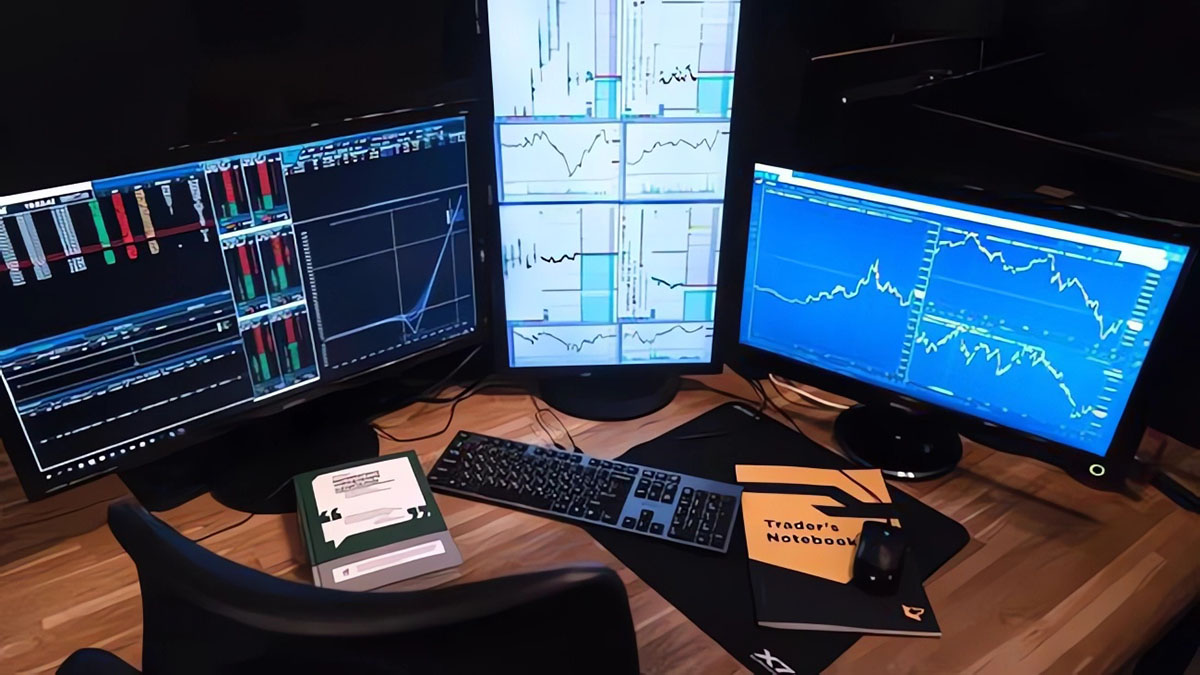
Pro traders follow a repeatable process: research, analysis, planning, execution, risk control, and review.
Risk management is the foundation of professional trading, especially in leveraged markets such as forex, CFDs, futures, and options.
Technical analysis helps traders read price action, but it works best when combined with macro and fundamental context.
Emotional control separates disciplined traders from reactive traders, particularly during losses, news events, and volatile sessions.
AI, algorithmic tools, and faster information flow have raised the standard for execution and decision-making.
Professional traders improve through review, not guesswork. A trading journal is a performance tool, not a diary.
Professional traders buy and sell financial instruments such as currencies, commodities, indices, stocks, bonds, futures, options, gold, and other derivatives. Their goal is not simply to “buy low and sell high.” Their job is to identify a setup, measure the risk, execute with discipline, and manage the trade according to a plan.
A professional trader’s daily routine usually follows six steps: study the market, analyse price and data, build a trading plan, place the trade, manage risk, and review the result. This workflow applies whether the trader focuses on EUR/USD, gold, the S&P 500, crude oil, or individual stocks.
The product may change. The process should not.
Market knowledge is the base layer of professional trading. Traders need to understand the instruments they trade, including trading hours, spreads, liquidity, margin requirements, contract size, and major price drivers.
For forex traders, this means following interest rate expectations, inflation data, employment reports, central bank guidance, and bond yield spreads. For gold traders, it means watching real yields, the US Dollar, geopolitical risk, and safe-haven demand. For equity traders, earnings quality, margins, valuation, and sector rotation often matter more than the headline index move.
Good market knowledge helps traders filter noise. Not every headline matters. Not every price move deserves action.
Risk management is the skill that keeps traders in the game. A trader can have a strong market view and still fail if position size, leverage, or stop placement is poor.
Before entering a position, pro traders define the maximum loss they are willing to accept. They identify the stop-loss level, position size, target area, invalidation point, and expected risk-reward ratio. Many professional traders risk only a small percentage of their account on each trade because capital preservation comes before short-term profit.
This is especially important in leveraged products. European regulators have reminded firms that products meeting the definition of CFDs remain subject to product intervention rules, including leverage controls and investor protection requirements. ASIC’s CFD order also includes leverage limits from 30:1 to 2:1, margin close-out rules, and negative balance protection.
Trading pressure exposes weak habits. Fear can make traders close good positions too early. Greed can push them to overtrade. Frustration can lead to revenge trading after a loss.
Professional traders reduce emotional pressure through rules. They use fixed risk limits, predefined entries, stop-loss orders, trading journals, and daily loss limits. Some stop trading after two consecutive losses. Others reduce position size after a drawdown or avoid trading around high-impact data releases.
Emotional control does not mean ignoring stress. It means building a system that prevents stress from controlling the next decision.
Technical analysis helps traders read market structure. It uses price charts, support and resistance, trendlines, moving averages, RSI, MACD, Fibonacci levels, candlestick patterns, and volatility indicators to understand where buyers and sellers are active.
A useful technical setup answers three questions:
Where is the entry?
Where is the trade idea wrong?
Where is the realistic target?
For example, a breakout above resistance may look attractive, but a professional trader still checks whether volume, volatility, and broader trend conditions support continuation. A moving-average signal is stronger when it aligns with market structure. An RSI divergence matters more near a major supply zone than in the middle of a noisy range.
Technical analysis should support judgment, not replace it.
Fundamental analysis explains why prices may move. It studies economic data, central bank policy, company earnings, industry trends, fiscal policy, geopolitical risk, and valuation.
In forex, traders often compare inflation trends, interest rate expectations, and economic growth between two countries. In stocks, they assess revenue, earnings, guidance, cash flow, debt, margins, and competitive position. In commodities, supply disruptions, inventory levels, industrial demand, and weather conditions can all affect price.
The strongest traders do not treat technical and fundamental analysis as separate worlds. They use fundamentals to understand direction and technicals to improve timing.
Execution is where analysis becomes a real trade. Poor execution can damage even a good idea.
Pro traders understand order types, spread behaviour, session liquidity, slippage, and volatility. A limit order may help control the entry price. A market order may be necessary in fast-moving conditions, but it can result in worse fills. During news events, spreads may widen and stop orders may trigger at less favourable prices.
Execution has become more demanding as algorithmic and AI-assisted tools spread across financial markets. The Bank of England has highlighted AI’s growing role in financial markets and core financial decision-making, alongside risks such as correlated behaviour and model dependence.
Discipline is the ability to follow the trading plan when it is uncomfortable. It matters most when a trader is winning too easily or losing too quickly.
A disciplined trader does not double position size after a lucky win, move a stop-loss wider to avoid taking a loss, or change strategy after one bad trade. Discipline also means knowing when not to trade. No setup is better than a weak setup.
Professional traders measure discipline after the trade. They review whether the trade followed the plan, whether risk was controlled, and whether the result was due to skill or luck.
Markets change. A strategy that works in a trending market may fail in a range. A breakout setup may perform well during periods of high volatility but poorly when liquidity is thin. A currency pair may move on rate expectations one month and trade policy the next.
Pro traders adapt by identifying the market regime. They adjust position size, holding period, setup selection, and risk limits when conditions change.
Adaptability is not random strategy switching. It is the ability to recognise when the market environment no longer supports the original approach.
Professional traders need timely, relevant information. Economic calendars, central bank speeches, earnings releases, market depth, volatility data, positioning indicators, and real-time news can all influence trading decisions.
The challenge is not access to information. The challenge is filtering it. Retail traders often react to too many headlines. Pro traders focus on information that can change prices, liquidity, or probabilities.
A US inflation surprise, a central bank policy shift, a large earnings miss, or an unexpected geopolitical event can quickly change the trading landscape. Information matters only when it improves decision-making.
Professional trading requires constant learning. Markets evolve, regulations change, platforms improve, and new tools appear. A trader who stops learning eventually trades yesterday’s market.
Learning includes reviewing failed trades, testing new ideas, studying historical market behaviour, improving technical skills, and understanding new risks. It also requires humility. No trader is right all the time.
The goal is not to avoid losses completely. The goal is to make losses controlled, understandable, and useful for improvement.
A professional trader needs a repeatable workflow. Without one, trading becomes a reaction, not a strategy.
This workflow turns trading from a series of guesses into a structured decision process. It does not guarantee profit, but it improves consistency and reduces avoidable mistakes.
Risk management is the most important skill. Market knowledge, analysis, and execution all matter, but poor risk control can destroy an account even when the trader has good ideas. Professional traders protect capital first and pursue profit second.
Most professional traders use both. Technical analysis helps identify price structure, entries, exits, and invalidation levels. Fundamental analysis explains the larger market drivers. Combining both gives traders a stronger decision framework.
They use rules. Stop-loss levels, position sizing, daily loss limits, trading journals, and predefined setups reduce emotional decision-making. The aim is not to eliminate emotion, but to prevent emotion from changing the plan.
Yes, but it takes time and structured practice. Beginners should focus first on market basics, risk management, journaling, and simple strategies before using leverage or complex products. Professional skills develop through repetition, review, and discipline.
The key traits and skills for pro traders are practical, not glamorous. Professional traders understand their market, control risk, manage emotions, analyse price and fundamentals, execute carefully, and review their performance with discipline.
In 2026, these skills matter even more as markets become faster, more automated, and increasingly data-sensitive. The best traders are not those who react to every move. They are the ones who build a repeatable process, protect capital, and keep improving when market conditions change.
Disclaimer: This material is for general information purposes only and is not intended as (and should not be considered to be) financial, investment or other advice on which reliance should be placed. No opinion given in the material constitutes a recommendation by EBC or the author that any particular investment, security, transaction or investment strategy is suitable for any specific person.